
From concept to production: a roadmap to scale
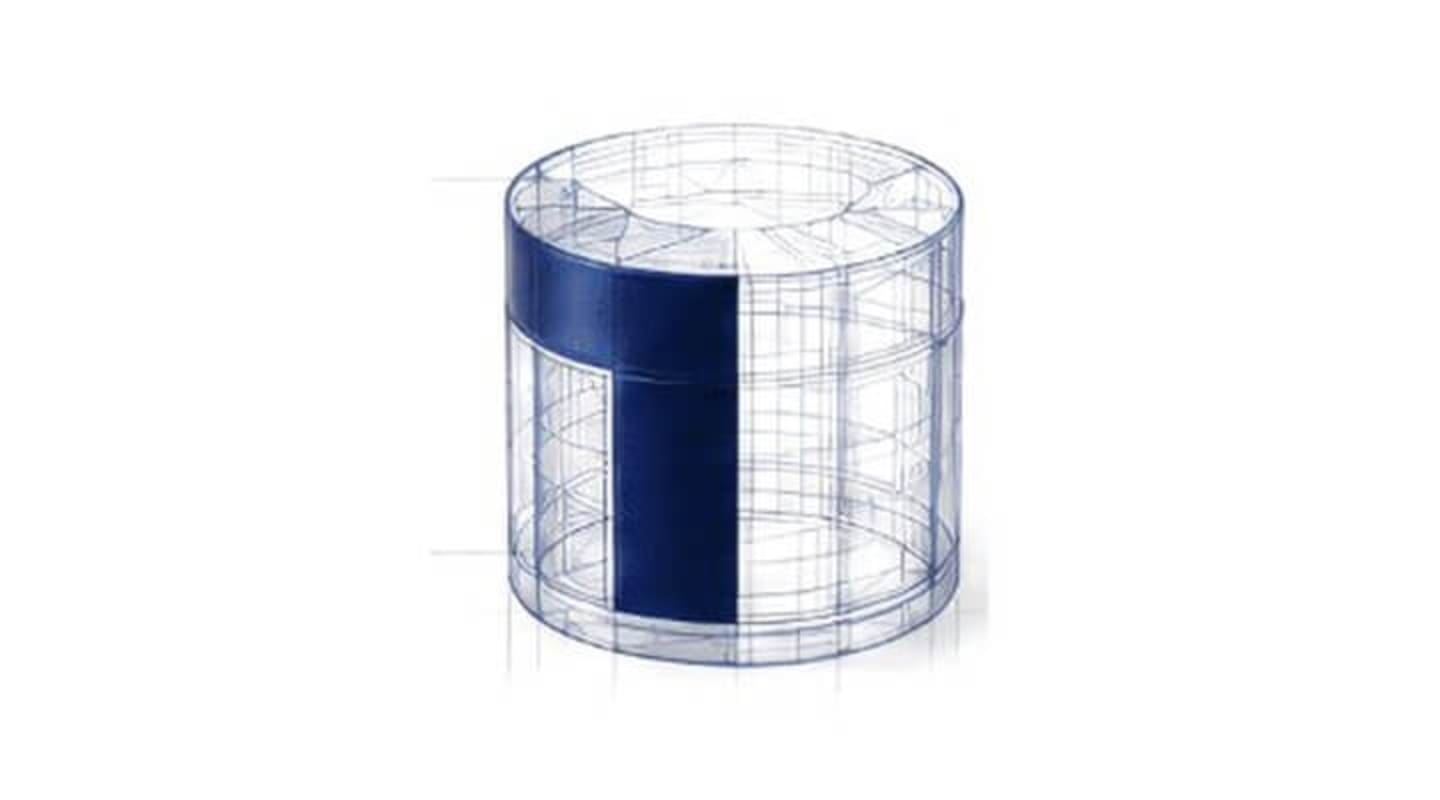
A great package concept can begin with a sketch, rendering, or prototype. But turning that idea into a manufacturable aluminum package requires more than a strong visual direction. It requires early engineering input, clear requirements, and an understanding of how design decisions affect production.
As Josh Robertson, Business Commercialization Manager at Anomatic, explains: "A concept sketch is where the sky is the limit and the focus is on what could be. Manufacturing, by contrast, operates under physics and process controls." That difference is where many packaging challenges begin.
Vision has to meet process
A package may look premium in a rendering but still pose challenges during aluminum forming, finishing, decoration, or assembly. Sharp corners, zero-radius transitions, deep draws, tight tolerances, and complex decoration areas can all affect whether a design can be made consistently at scale.
"Designers frequently sketch zero-radius corners and sharp feature transitions that look precise on screen but can't be produced as drawn," Robertson says. "Aluminum forming requires radii at every transition to allow the metal to flow without thinning or tearing." By partnering designers with Anomatic engineers early in the concept phase, teams can build upon concepts to create designs that respect the closure integration and overall function of a manufacturable part.
Nick Sicilian, Packaging Development Director at Anomatic, summarizes the balance well: "A great concept is about the vision, but a manufacturable package is where design and process come together." The best outcomes preserve the original design intent while engineering the package for real-world production.
Where problems often appear
Many issues are not obvious at the concept stage. A prototype may look right, but once a part is stamped, anodized, decorated, or assembled at production volumes, small design details can become visible quality concerns. Common problem areas include geometry transitions, surface requirements, draw depth, corner radii, flatness, tolerances, finish, decoration areas, and closure integration.
Visual issues that were not obvious early in development can become very apparent once the part moves into the real manufacturing process. These may show up as shadowing, drag lines, read-through, color variation, edge build, or visual distortion. The part may still function, but it may not fully meet the intended appearance. Early manufacturability review helps identify these risks before they become costly delays.
What to bring to the kickoff
A strong kickoff helps prevent rework. Customers should provide as much detail as possible about the desired package, including: competitive benchmarks or reference samples; desired performance, finish, and function; annual volume and first-order quantities; seasonal or surge capacity needs; launch timing, pre-production needs, and line trial dates; packaging standards such as carton size, pack out, and skid type; decoration intent, even if not finalized; regulatory requirements; and how parts will be handled after shipment.
Reference samples are especially helpful because they turn subjective goals like "premium," "durable," or "high-end finish" into something the team can evaluate and engineer toward.
Production readiness means consistency
Moving into production is not just about making the equipment run. It is about proving the process can run consistently, reliably, and at scale. "At Anomatic, production readiness means the risks have been engineered out, not managed on the fly," says Troy Hobbs, Director of Engineering.
Before launch, essential validations include sustained performance at target speed, consistent quality on cosmetic-critical surfaces, stable automation, reliable machine vision, and fault recovery without operator workarounds. As Hobbs puts it: "If a line requires constant adjustment or manual intervention, it isn't ready."
Designing for scale
Scale-up delays often happen when risks are discovered too late. Supplier component variability, late design changes, cosmetic defects at production speed, or mechanical and control issues under sustained operation can all push timelines off track.
The way to prevent those issues is to validate early, test under realistic conditions, and involve engineering, commercialization, tooling, finishing, automation, and quality teams from the start. Successful production launches are predictable because the risks have already been addressed. By designing for scale from the beginning, packaging teams can protect the original concept, reduce surprises, and move from idea to production with greater confidence.
Mapping out future projects
Connect with Anomatic early in the process to identify risks, protect your design intent, and build a clear path to scalable production. Start a consultation to map out your next project.